
A physician invests $100,000 in an apartment deal. Her K-1 arrives the following spring showing a passive loss of $87,030. She forwards it to her CPA expecting a refund against a very large salary, and her CPA tells her it will not do that.
She was not misled, exactly. She was told something true and left to assume the rest.
Depreciation is the most powerful tax feature in real estate and the most consistently oversold. The mechanics are worth understanding precisely, because the limit is where the disappointment lives, and the limit is not hidden. It is just rarely mentioned on stage.
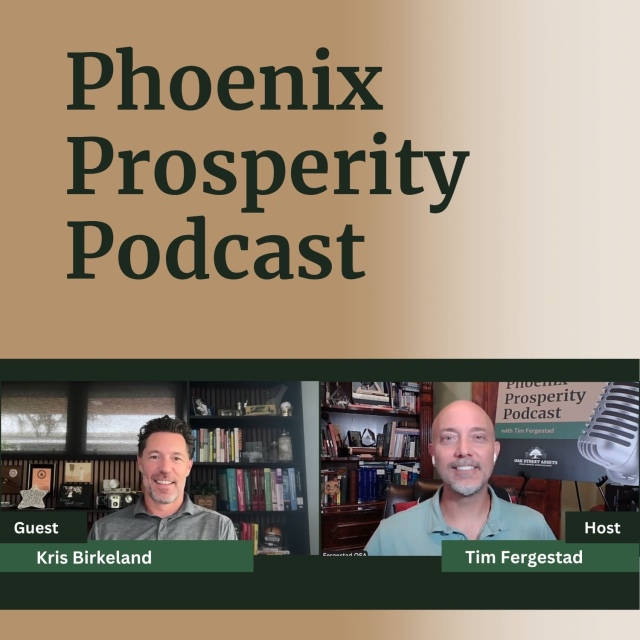
We recorded a conversation with Brian Bigham, VP at Madison SPECS, the firm that performed the cost segregation study on our Winston Apartments acquisition in San Antonio. What follows is the short version. The full guide has the deal worked end to end.
Watch the full interview with Brian Bigham, 27 minutes, chapters in the description.
Depreciation is a timing tool, not a discount
The IRS lets you deduct the cost of a building over time, on the theory that it wears out, whether or not it does. Residential rental property runs on a 27.5 year schedule. Take the purchase price, subtract the land, divide by 27.5, and that is your deduction each year.
A cost segregation study changes when you take it, not how much. Engineers walk the property and assign a value and a useful life to every component. Carpet, cabinetry, appliances and fixtures do not last 27.5 years, so they move to a 5 year schedule. Fencing, landscaping, paving and retaining walls move to 15 years.
As Brian puts it, the whole strategy reduces to one phrase: the time value of money. You are pulling deductions from later years into the first few. By year seven, a cost segregated property produces less annual depreciation than it would have on the straight line schedule. The total never changes.
Bonus depreciation is what makes the front end dramatic. For property acquired after January 19, 2025, the One Big Beautiful Bill Act restored the 100 percent rate, so anything with a useful life of 20 years or less can be deducted in the first year rather than spread across its own schedule. The structure itself stays on 27.5 years.
What that looked like on a real property
Winston Apartments is a 112 unit community built in 1981, purchased for $11,250,000. After the cost segregation study, 38 percent of the depreciable basis reclassified into 5 and 15 year property, all of it eligible for the full bonus rate. A $100,000 limited partner position carried $87,030 of first year deduction, and about $112,672 cumulatively over six years.
Two things before anyone builds a plan around that. It is a model prepared before the property’s first tax filing, not a result. And 87 percent of capital in year one is a function of leverage and allocation, not a feature of the asset class. The guide walks through the full schedule, the three investor scenarios, and why the figure moves when the debt or the land allocation changes.
Here is the part that gets left out
That $87,030 is a passive loss. Passive losses offset passive income. They do not offset wages.
Brian said it plainly on camera: “Passive losses offset passive income. Not active income.”
There are two exceptions and most high earners meet neither.
Real estate professional status requires that more than half of your personal services in the year go to real property trades or businesses, and more than 750 hours. A physician or attorney working a full professional schedule cannot satisfy the first test on their own hours, because real estate cannot be more than half of their services when their profession already is. On a joint return the tests apply to each spouse separately, which is why this is sometimes a real planning path for a household rather than an individual.
The short term rental exception applies when the average period of customer use is seven days or less, which makes the activity a trade or business rather than a rental. It applies to a property you own and operate yourself. It does not apply to a limited partner interest in an apartment community with annual leases.
So for most passive investors in most syndications, the honest answer is that the deduction shelters passive income and nothing else.
Nothing is lost, it is queued
A suspended passive loss does not expire. It attaches to the activity, carries forward indefinitely, and comes back three ways: the deal’s own income absorbs it as depreciation drops off and net operating income climbs, other passive investments throw off income it can meet, or a fully taxable disposition of the entire interest releases it all at once.
This is why a passive portfolio tends to get more tax efficient as it grows. The first deal’s deduction often has nowhere to go. The third deal’s does. It is also the practical version of the argument we make in The Income Trap: ownership compounds in ways that earning more does not.
One honest note about the exit
Accelerated depreciation lowers the property’s basis, so the gain at sale is larger and some of what you deducted gets taxed back. How much depends on your bracket in that year and your state, and your CPA will model it when the time comes.
That does not undo the case. Tax you did not pay in 2026 was invested and compounding for five to seven years, and you often settle up in a year when your income looks different. That is the whole argument, and it is the one Brian makes: the time value of money. Worth doing. Not the same as never paying.
What to do with this
Before you evaluate any offering on its tax profile, total your expected passive income for the year. That number, not the deal’s depreciation schedule, sets the ceiling on what a first year deduction is worth to you.
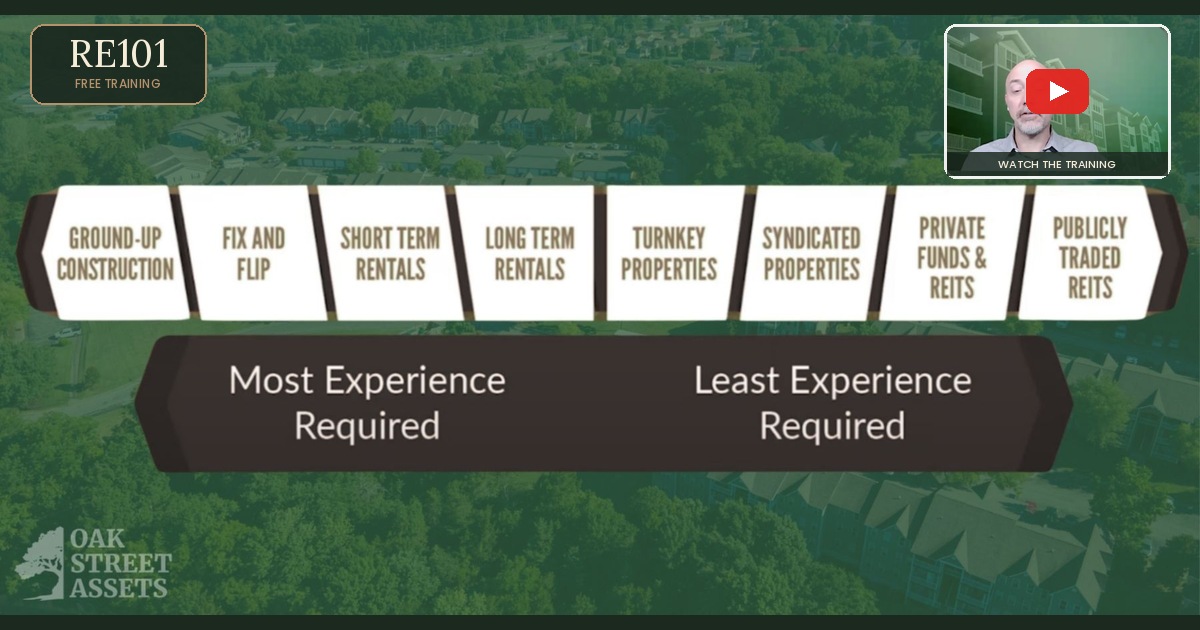
Then underwrite the deal on its merits. A property that does not work does not become a good investment because of its tax treatment. If you are still deciding how active you want to be in real estate at all, start with active, passive, or somewhere in between.
Download the Depreciation Guide for Passive Investors. Nine pages, the Winston numbers in full, the three exceptions, and nine questions to ask a sponsor before you wire. It is free and there is no form.
For educational purposes only. This is not tax, legal or investment advice, and neither Oak Street Assets nor Madison SPECS is your advisor. Figures from the Winston Apartments cost segregation model are illustrative, prepared before the property’s first tax filing, and are not a projection of returns. Past and projected performance do not guarantee results. Nothing here is an offer to sell or a solicitation to buy any security. Tax treatment depends on your own circumstances. Talk to your CPA.