
“Can you really invest in real estate passively, without becoming a landlord?”
The short answer is yes. The longer answer is that the word “passive” gets used to mean very different things, and the differences decide how much of your time, and how much of the tax benefit, you actually keep.
Active vs. Passive: A Spectrum, Not a Switch
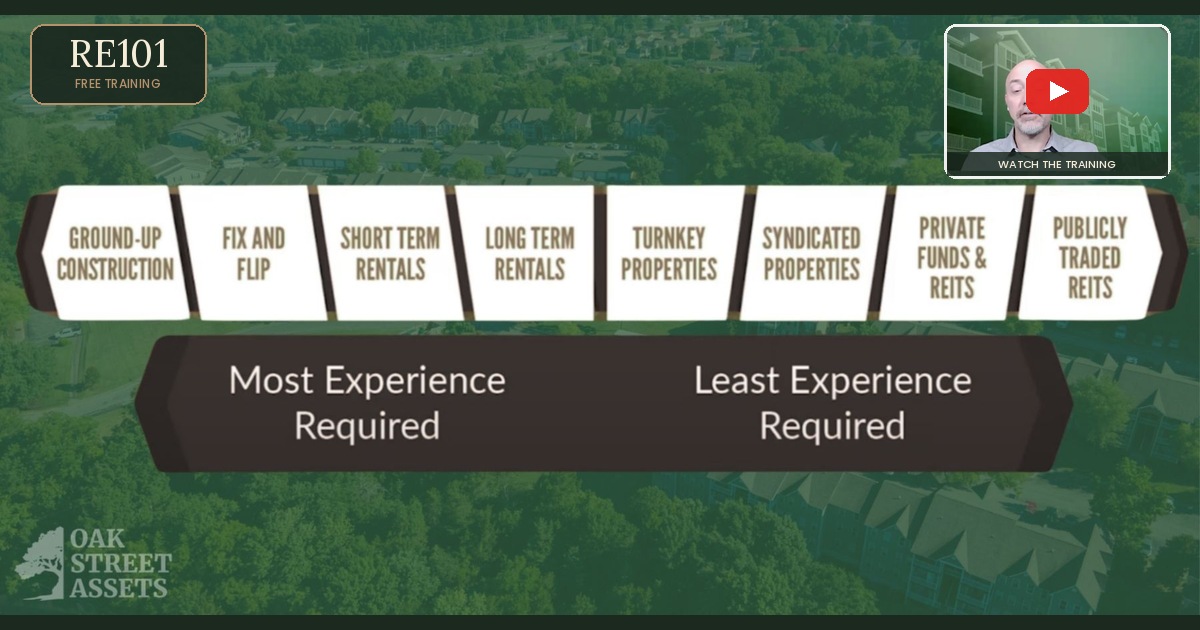
Real estate investing runs along a spectrum. At the active end, you buy properties yourself: you find the deal, arrange financing, screen tenants, handle repairs, and carry all the risk and all the upside. Done well it can be rewarding. It is also a second job, which is the opposite of what most busy professionals are looking for.
At the passive end, you put capital to work in real estate that other people operate. You are an investor, not an operator. You are not fixing furnaces or fielding tenant calls at midnight. Between those two ends sit a lot of options that all get marketed as “passive,” so it helps to know what you are actually buying.
The Types of Passive Real Estate
Here are the most common ways people invest in real estate more passively, starting with where most investors actually begin:
- Buying a property and hiring a manager. This is where many investors start, and it is the one most people discover is not truly passive. Yes, a property manager can handle tenants, showings, and repairs. But you still own the asset and everything that comes with it: property taxes and insurance that keep rising, big-ticket capital costs when a roof or HVAC unit fails, vacancies between tenants, financing and refinancing decisions, and the ups and downs of your local market. The manager works for you, which means you are still hiring, reviewing, and occasionally replacing them. It can absolutely build wealth, but it comes with real money, energy, and stress, and it is closer to running a small business than to a hands-off investment.
- Public REITs. Shares of a publicly traded real estate company, bought in a brokerage account. The most liquid and the easiest to start. The catch is that they trade like stocks and behave like stocks. We covered why that matters in “But I Already Own Real Estate, I Have REITs.”
- Private REITs and debt funds. Real estate companies that are not listed on a stock exchange, so their value is not repriced by the market every day. They can pursue focused strategies, and terms vary widely. We compare the two in a companion article, Public vs. Private REITs.
- Real estate syndications. A group of investors pools capital to buy a specific property, most often an apartment community, run by an experienced operator. You own a piece of an actual building, receive a K-1, and can access the depreciation and other tax benefits of direct ownership. If the word is new to you, start with our field guide to syndication.
- Real estate funds. Similar to a syndication, but the fund holds several properties or loans rather than a single asset, which spreads exposure across more than one deal.
What “Truly Passive” Actually Looks Like
In a well-structured syndication or fund, your role is simple. You review the opportunity, decide whether it fits your goals, invest, and then receive reports and distributions. The operator handles acquisition, renovations, management, and the eventual sale. You are a limited partner, which means your involvement, and your liability, is limited to the capital you commit.
That is the version of passive most people are picturing when they say they want real estate without the headaches: real ownership of a real asset, with someone else doing the work.
The Honest Trade-Offs
Passive does not mean risk-free, and it is not a free lunch. The trade-offs are worth saying plainly:
- Liquidity. Private real estate usually asks you to commit capital for a period of years. Some structures are more flexible than others, but you should not invest money you may need next month.
- Access. Many private offerings are limited to accredited investors.
- Operator selection. When you are passive, your outcome depends heavily on who is running the deal. Vetting the operator is the most important work you do.
Handle those three well and passive real estate can do something a brokerage account cannot: pay you cash flow, pass through real tax benefits, and hold value based on a building’s performance rather than the mood of the market.
At Oak Street Assets, this is the core of what we do. We focus on private real estate partnerships, we invest alongside our investors, and we lead with education so you can decide what fits. Not real estate flavored paper. Real buildings, real residents, real income.
Passive Investments. Active Living.
If you are curious what genuinely passive real estate could look like in your portfolio, let’s connect. A 20-minute conversation is usually all it takes.
Tim Fergestad, PhD, is the founder of Oak Street Assets, a boutique alternative investment firm in Scottsdale, Arizona that helps investors build wealth through private real estate. This article is for educational purposes only and is not investment, tax, or legal advice. All investments involve risk, including possible loss of principal. Consult your own advisors before investing.
#plantingacorns